Thursday, April 17, 2014

Best of Reading Room: WITCHES' TALES "Invasion" (the Original, SCARIER Story!)

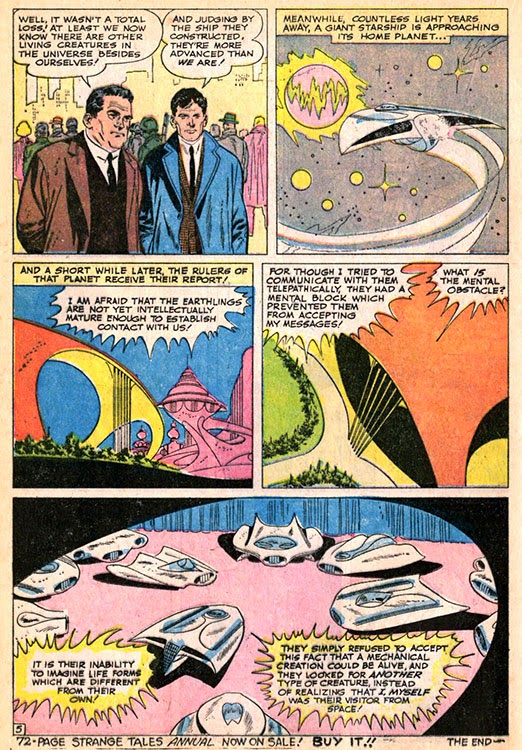
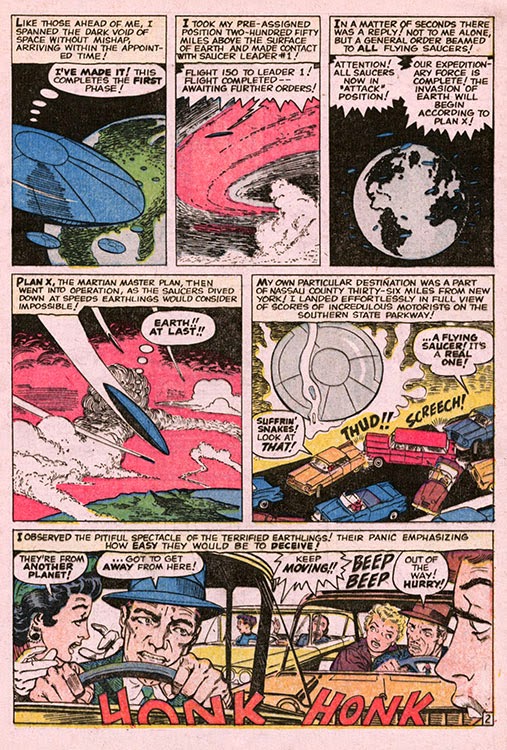
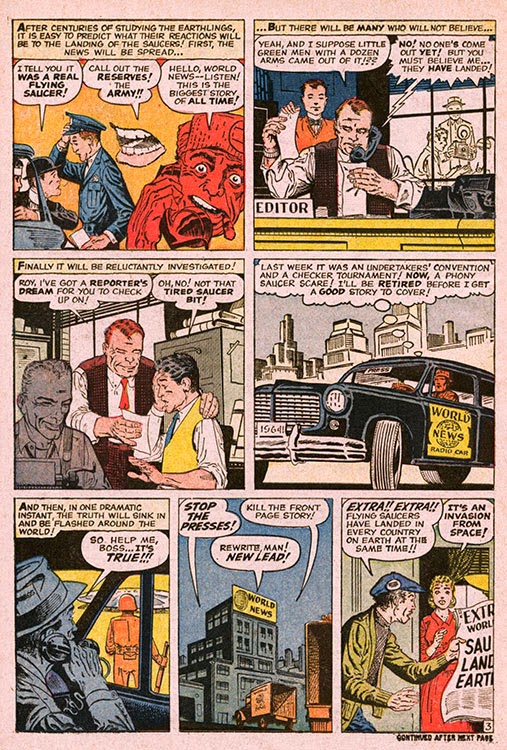
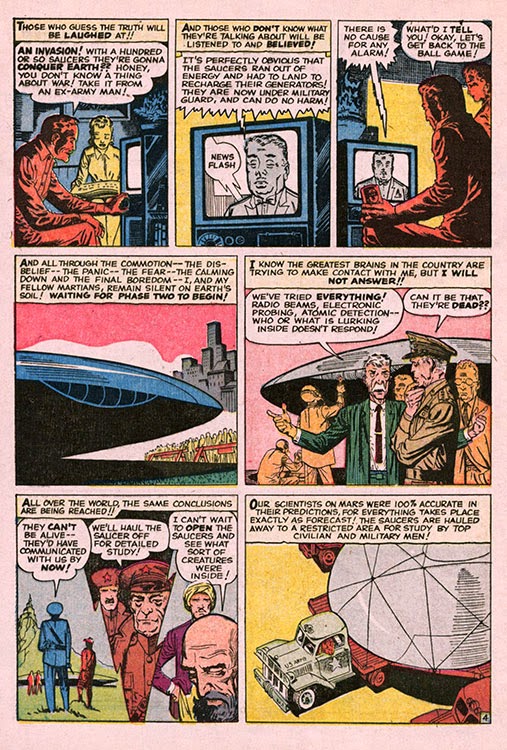
Edited version
...but it had been radically-altered from it's first appearance, and that the original version had never been reprinted!
We will now correct that mistake and present pages unseen in over fifty years!
First the toned-down version, then the original, scarier version...
Original version
 Note in the original version, both the wife and singer on tv show a lot more cleavage!
Edited version
Original version
Again, more cleavage in the original version...
Edited version
Original version
Oddly enough, the wife's cleavage is unchanged, but the look of terror in the last panel is toned down!
Edited version
Original version
Panel four in the original version is much more gruesome than the edited version.  Note the dialogue balloon is unchanged, even though there's no actual weapons fire in the edited version!
Edited version
 This last page is radically-different! Prepare yourself!
Ready?
Proceed...but remember, I warned you...
Original version
Wow!
The edited pages were from Race for the Moon #1 (1958)
The original story was from Witches' Tales #21 (1953)
As you can see, the Comics Code Authority insisted on some major redos, including most of the last page!

Whenever possible, we'll present examples of similar "reworking" of stories pre and post-Comics Code!

Wednesday, April 16, 2014

Best of Reading Room: RACE FOR THE MOON "Invasion"

Some people called early television "just radio with pictures"...
...a premise taken to an obvious extreme in this tale...
Unfortunately, the technological level of tv fx in 1958, when this story was published in Race for the Moon #1, make the events of the story highly unlikely.
The primary reason the inspiration for this story, the 1938 War of the Worlds radio hoax by Orson Welles and the Mercury Theatre of the Air, worked was because peoples' imaginations ran wild, fueled by sound effects and well-written dialogue!
The "visuals" were in their heads!
Nonetheless, the unknown writer and artist Bob Powell did their best in only five pages.
And, the comic's intended audience, kids aged 9-15, could accept the premise, especially if they had no knowledge of the Welles radio show, which wasn't often rebroadcast until old radio show reruns made a comeback in the mid-1960s on college radio stations and lp albums.

NOTE: This story is a radically toned-down version of a tale that appeared a decade earlier!
Tomorrow we'll show you how it ORIGINALLY looked...pre-Comics Code, which has NEVER been reprinted!

Tuesday, April 15, 2014

MOPSY "Taxes"

The average person's fear of April 15th hasn't changed in decades...
...as this page from Charlton's TV Teens #9 (1955) shows!
If the fashions seem a little dated for 1955, that's because this series consisted of reprints of 1940s newspaper strips along with several stories created for Mopsy's first comic book series in the late 1940s.
Creator Gladys Parker wrote and drew all Mopsy material without "ghosts" to help, and when she retired in 1965, the strip ended.
Parker passed away the following year.

Trivia: The filing deadline for individuals was March 1 in 1913 (the first year of a federal income tax), and was changed to March 15 in 1918 (inspiring many jokes about having to "beware the Ides of March"), then to April 15 in 1955.

Monday, April 14, 2014

Reading Room ALIEN ENCOUNTERS "Earth Invasion"

There's a twist ending to this alien invasion tale you won't see coming...
...if you're under 30!
I'm serious!
Ah, video arcades...
Kids today have no idea how important those darkened chambers filled with video consoles and pinball machines were to us in the pre-XBox/PlayStation/Nintendo days...and how much money we spent, quarter-by-quarter, in them!
Yeah, there's still Chuck E Cheese, Dave & Busters, and their ilk, but those are kiddie venues!

Written by Larry Shell and illustrated by Steve (Swamp Thing) Bissette, this never-reprinted tale from FantaCo's Alien Encounters one-shot (1981) captures the long-lost era perfectly.

Sunday, April 13, 2014

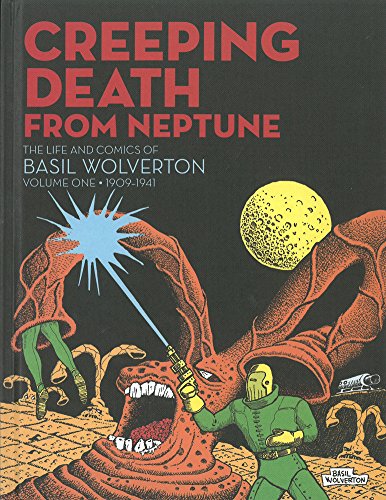
Best of Reading Room SPACEHAWK "Creeping Death from Neptune"

How could you not want to read a story with a title like that?
 Plus: story and art by the unique (to put it mildly) Basil Wolverton!
This premiere appearance from Novelty's Target Comics V1 N5 (1940), written and illustrated by Wolverton, was just the tip of the iceberg!
SpaceHawk "unmasked" a couple of issues later, but the legend was already well-established, and the fact he was a "mere" human who could take down aliens several times his size and strength only made him even more fearsome to his foes...
BTW, you may have noticed a change in our sub-head to "Space Hero" rather than "Space Force".
That's because we're switching over to the lone wolves of the spaceways as they battle against those who would dominate or destroy the universe!
Since the response to Basil Wolverton's Space Patrol strips has been...dare we say...stellar, we decided his best-known strip, SpaceHawk will be the "anchor" strip every two weeks, with other characters popping up for limited runs!
Who are the "other characters"?
Be here next week to find out the first one!
Support Atomic Kommie Comics!
Visit Amazon and Buy...

Saturday, April 12, 2014

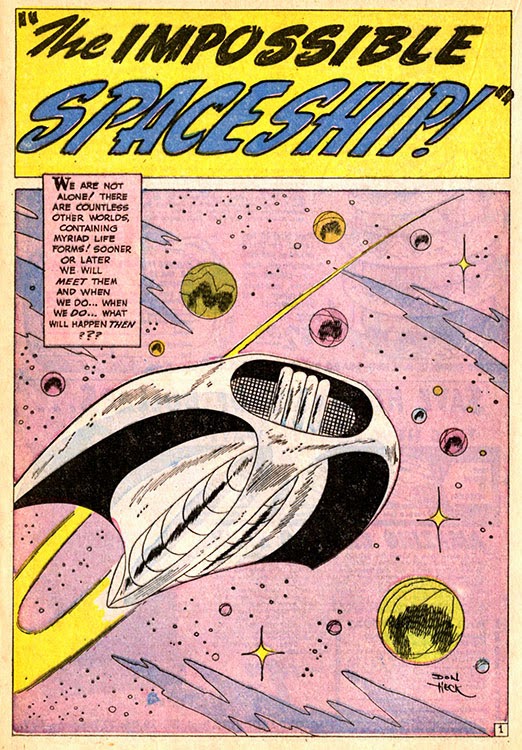
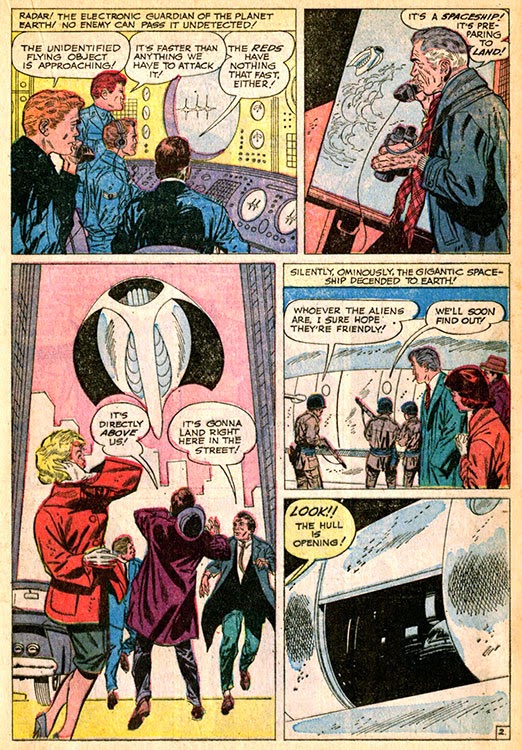
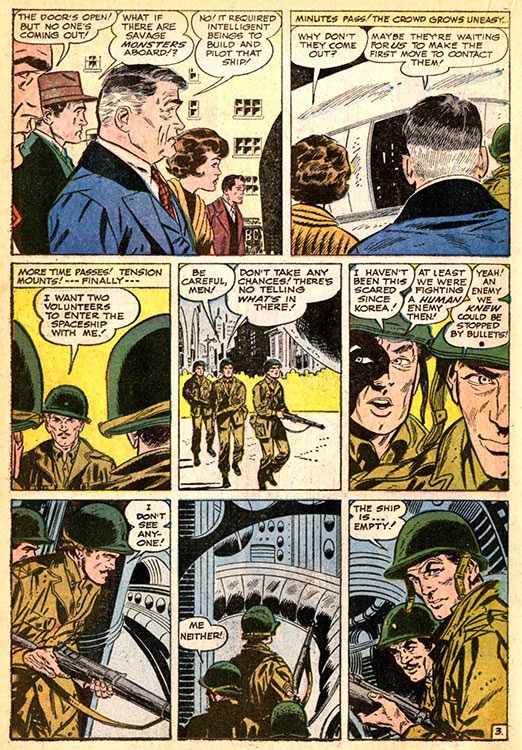
Reading Room: Flying Saucers x Four #4 "Impossible Spaceship"

The final version of the story doesn't even include the words "flying saucer" in the title...
...and the ship design itself is closer to Star Trek or 1960s Italian sci-fi like Planet of the Vampires (one of my all-time faves)...
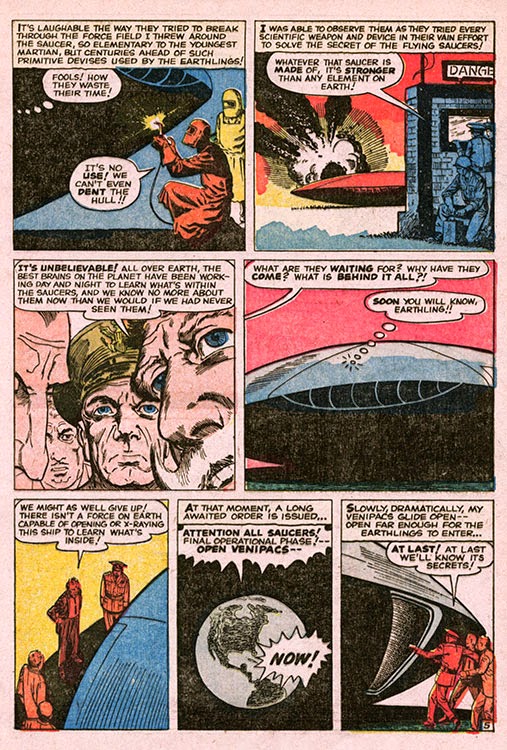
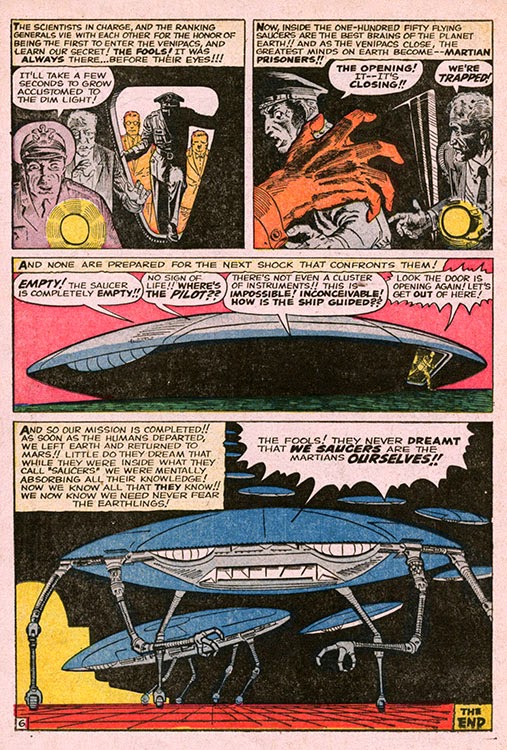
Published in the back of Marvel's Strange Tales #101 (1962), this MadMan-era, never-reprinted, Don Heck-illustrated, Stan Lee-scripted tale was the final version of a Stan Lee plot involving sentient alien spacecraft first used in 1953 (HERE), then re-used in 1958 (HERE), and 1960 (HERE).
NOTE: Atlas had given way to Marvel several months earlier with Amazing Fantasy #15 (first Spider-Man) and Fantastic Four #1 in 1961.
(When Spider-Man received his own title a year later, the FF were cover-featured guest-stars!)
BTW, the cover feature for this issue was the introduction of the Human Torch's short-lived solo strip!
Weird Trivia: All four of the issues these stories originally appeared in had a number "1" in the issue numbering (21, 1, 11, 101)!

Friday, April 11, 2014

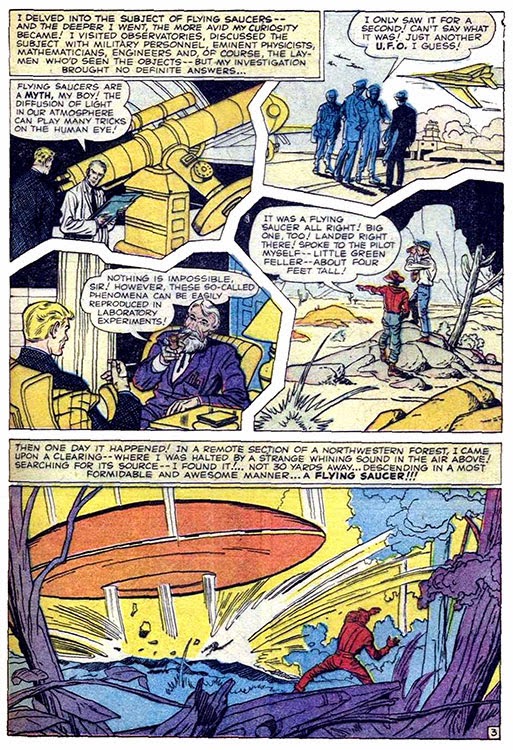
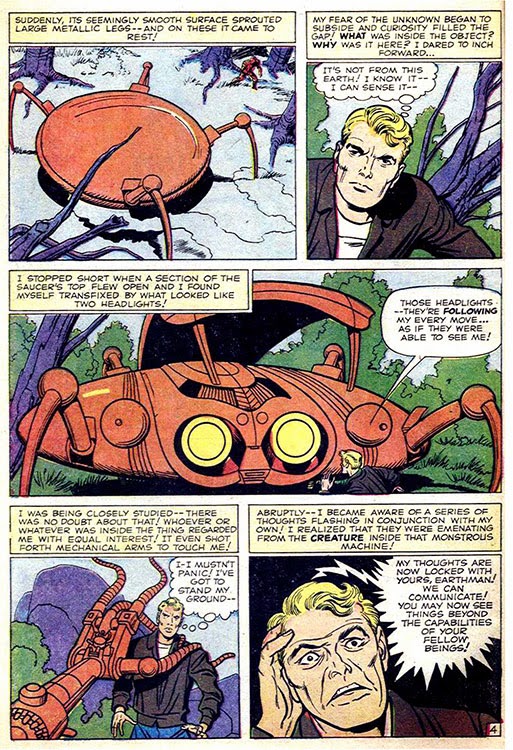
Reading Room: Flying Saucers x Four #3 "I Know the Secret of the Flying Saucer!"

Yesterday, Jack Kirby demonstrated why he was THE KING...
...now Spider-Man co-creator Steve Ditko shows us his unique approach to the same plot!
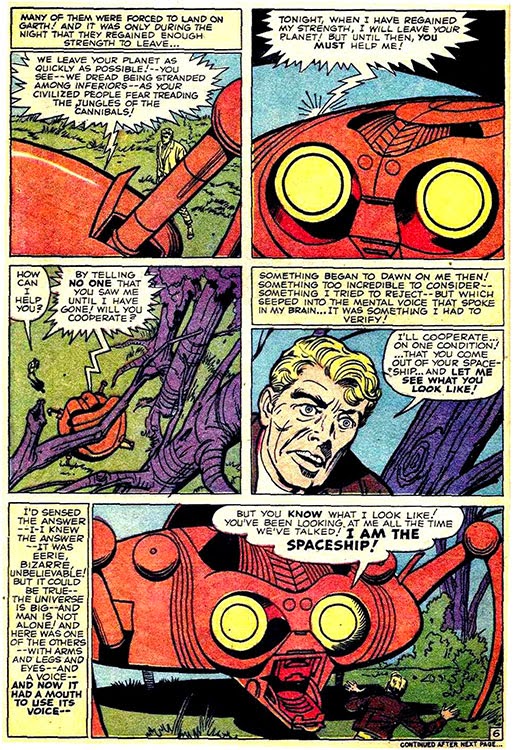
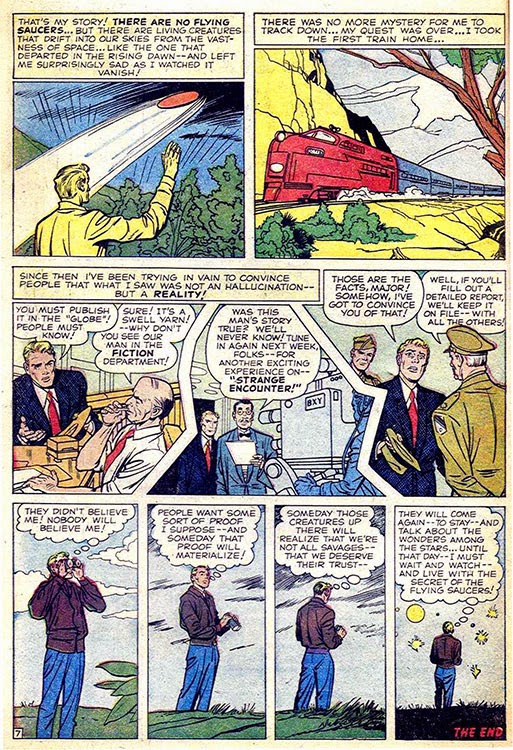
Presented in the back of Atlas' (later Marvel's) Tales of Suspense #11 (1960), this Stan Lee/Steve Ditko collaboration takes the twice-told tale (as we showed you HERE and HERE) and adds Ditko's more personal/less cosmic storytelling approach, playing up emotions of wonder and fear, taking the story closer to its' horror comic origins...but without the devouring of humans.
It's not better or worse, just different.
Tomorrow, the final version of the tale, from another Silver Age stalwart!

Thursday, April 10, 2014

Reading Room: Flying Saucers x Four #2 "I Discovered the Secret of the Flying Saucers!"

Yesterday, we looked at the first of four stories involving sentient flying saucers...
Art by Jack Kirby and either Christopher Rule or George Klein
...all written by Stan Lee.
Today, we'll look at the second one, with art by the most famous collaborator of all...Jack Kirby!
At this point, Lee was editing the entire Atlas (soon to be Marvel) comics line as well as scripting most of it!
But, this story shows indications of being done using the "Marvel Method" of having the writer and artist discuss the story, the artist then co-plotting and drawing it, then the scripter writing dialogue and captions to fit.
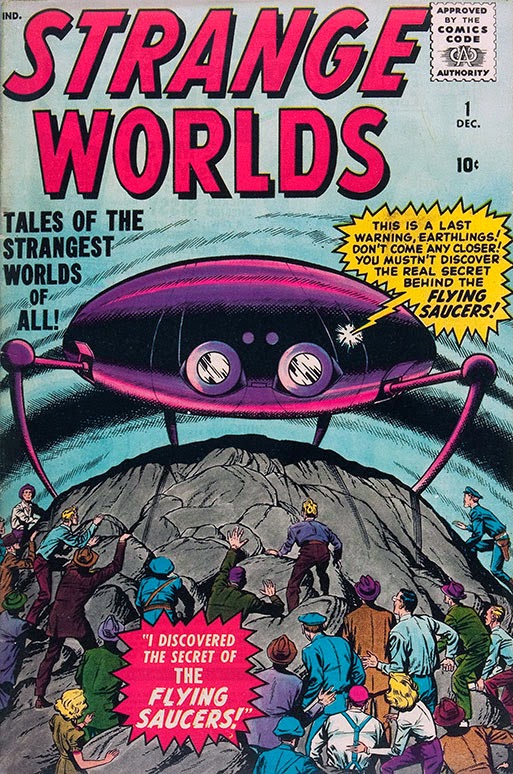
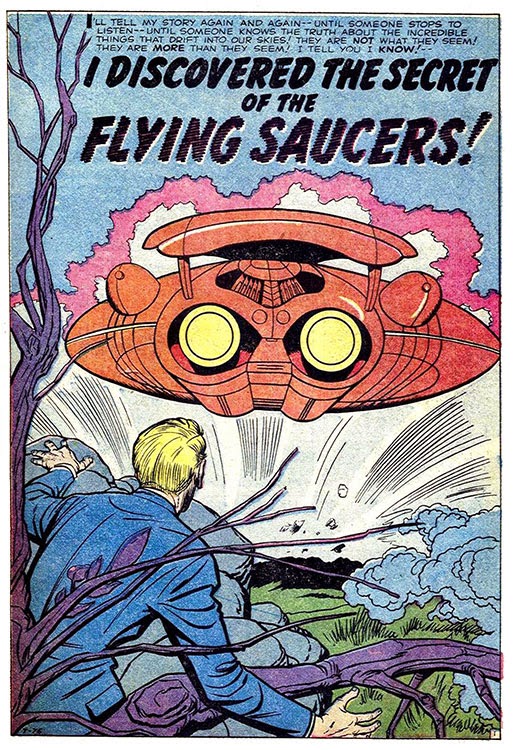
With distinctive art by Jack Kirby and Christopher Rule, the cover-featured tale from the first issue of Atlas' short-lived 1958-59 anthology Strange Worlds, feels more like something from Kirby's previous anthology series, Race for the Moon, rather than Lee's previous horror-oriented take on the concept of "alien IS flying saucer"!
The "epic space adventure" feel was something a lot of Kirby's previous work had, while most of Atlas' sci-fi stories (edited or written by Lee) favored a more "personal"approach with a minimum of spectacle, and certainly no half-page or full-page shots of alien cities or space battles!
Stan Lee has acknowledged that he was using the "Marvel Method" in 1961 when the first appearances of Spider-Man and the Fantastic Four were created, so it's obvious the time-saving technique, that gave more control to the artist, was already in use.
So I'm going with:
Plot by Stan Lee & Jack Kirby
Layout/Pencils by Kirby
Script by Lee 
Inks by Christopher Rule
Trivia: This was Kirby's first sci-fi story on his return to Atlas/Marvel!
Tomorrow, see how Atlas/Marvel's most idiosyncratic artist handled the same plotline two years later!

Wednesday, April 9, 2014

Reading Room: Flying Saucers x Four #1 "Secret of the Flying Saucer"

In the old days (pre-Silver Age), comic books recycled plots every few years...
Art by Bill Everett
...since the target audience changed every few years!
Let's see how one specific concept was re-used over a decade by one publisher.
Exhibit #1 is this tale...
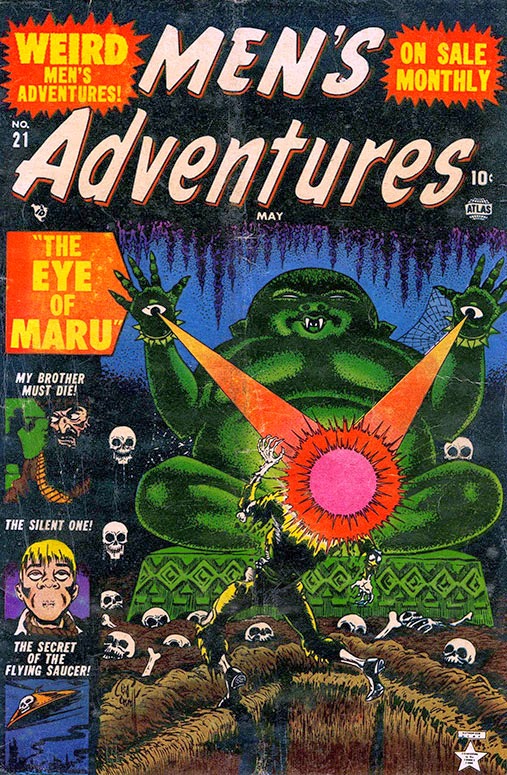
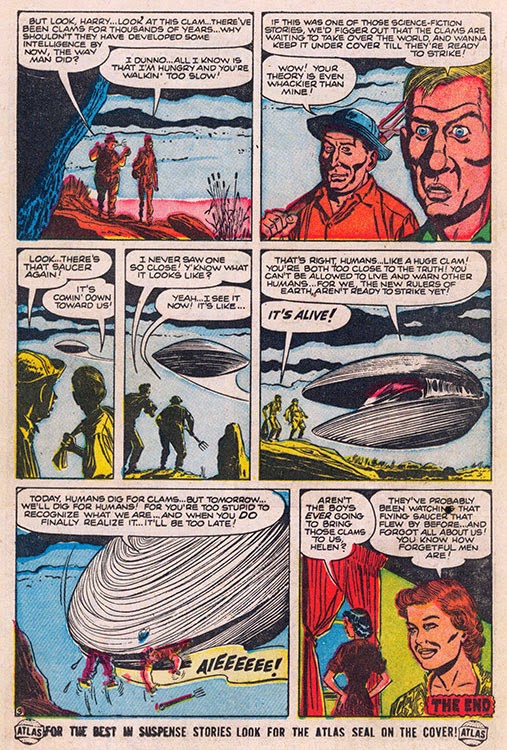
Written by Stan Lee and illustrated by Fred Kida, this never-reprinted, pre-Comics Code tale from Atlas' Men's Adventures #21 (1953) is definitely more "horror" than "sci-fi".
That's to be expected since this was the era of horror comics' greatest popularity, before the Congressional witchhunts and claims of comics causing juvenile delinquency.
Stan Lee would reuse the concept of a sentient spaceship meeting hapless humans several more times...as we shall see tomorrow!